How to Use Lye Safely starts with dropping the fear factor and getting real: that scary ingredient is the backbone of every legit bar of soap you admire. Soap Craft Lab safety guidance (2025) states that proper ventilation, gloves, and strict mixing order keep lye predictable, stressing disciplined habits over fear daily. This guide cuts the noise, showing a clean setup, smart handling, and calm control so your soap game feels creative, not chaotic.
Quick Answers: How to Use Lye Safely
- →Protective Gear: Wear sealed goggles or a face shield, nitrile gloves, closed-toe shoes, long sleeves and, if needed, a respirator.
- →Ventilation and Workspace: Choose a cool, dry, well-ventilated area; keep children and pets away.
- →Mixing Procedure: Always add lye to water in a heat-resistant container, stir slowly, monitor temperature, then cool before blending with oils.
- →Emergency Responses: Neutralize spills with vinegar, flush skin or eyes with running water for 15 minutes, keep first-aid supplies and poison control info nearby.
Essential Protective Gear for Working with Lye
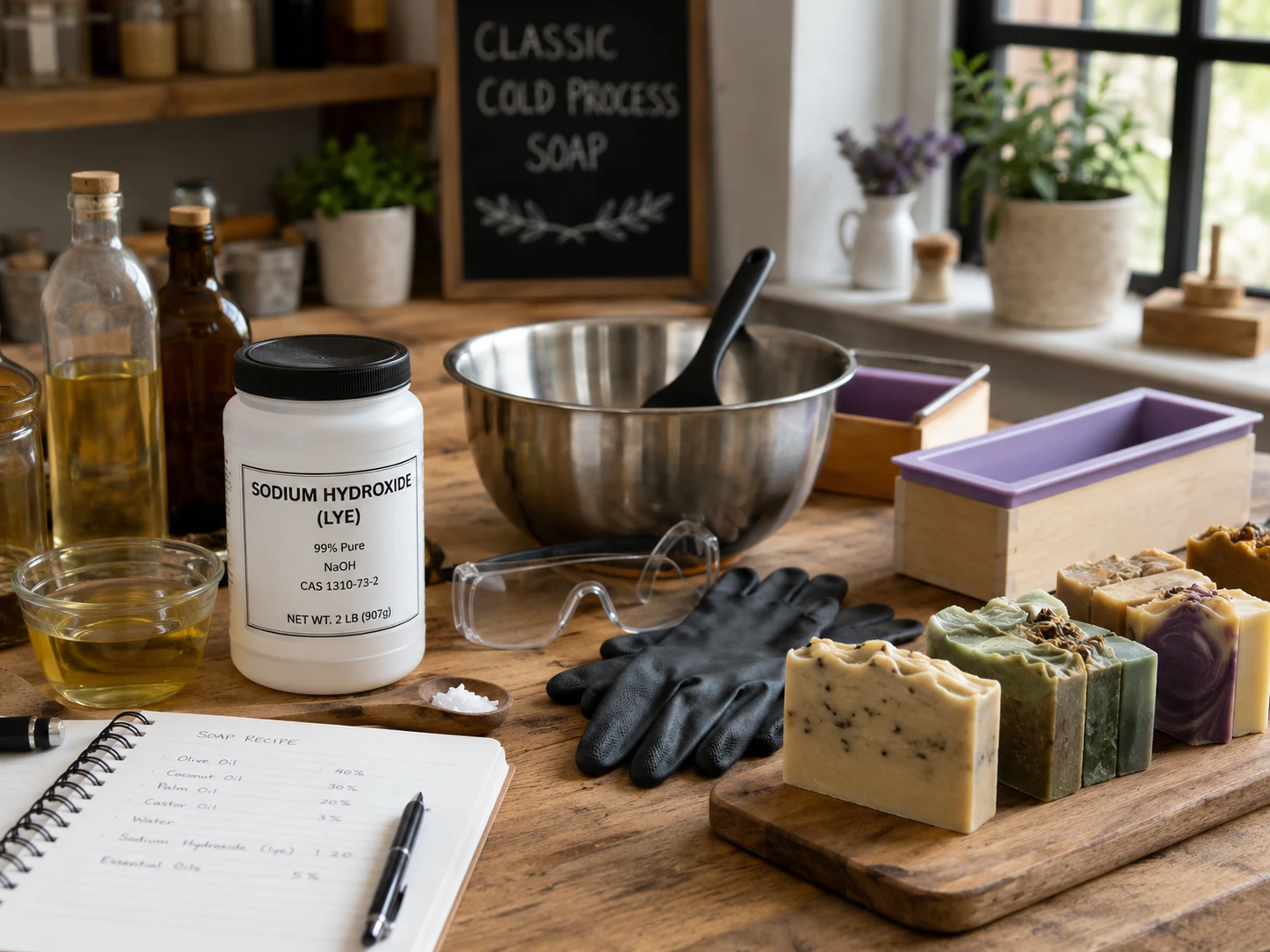
Learning How to Use Lye Safely starts with gear, not guesswork. If you want to use lye safely without stress, your setup matters. This guide breaks down protective basics in plain talk, so handling sodium hydroxide does not feel intimidating. At Soap Craft Lab, safe habits are always step one.
Safety Goggles vs Face Shield
When figuring out How to Use Lye Safely, eye and face coverage come first. Splash accidents happen fast. Chemical splash goggles create a tight seal around the eyes, offer serious splash protection, and provide strong impact resistance. Standard safety glasses block debris but do not fully protect from liquid splash. A face shield adds an extra layer over goggles and helps guard the entire face.
- Choose chemical splash goggles that seal around the eyes.
- Add a face shield for extra protection during mixing.
- Skip standard safety glasses — they do not stop liquid splashes.
Soap Craft Lab: Soap Craft Lab recommends always wearing sealed chemical goggles, not open-side safety glasses, when handling sodium hydroxide.
Nitrile Gloves and Long-Sleeved Clothing
Skin protection is non-negotiable when learning How to Use Lye Safely. Nitrile gloves resist chemical penetration better than latex. Long-sleeved clothing covers arms fully — roll cuffs over glove edges for a continuous barrier. Closed-toe shoes protect feet from drips. If a splash hits fabric, remove the clothing immediately and rinse the skin underneath.
- Use nitrile or neoprene gloves — not latex.
- Wear long sleeves and tuck cuffs over glove edges.
- Always wear closed-toe shoes in the soap making area.
Respirator and Ventilation Setup
Lye fumes are real, and learning How to Use Lye Safely means respecting them. When mixing lye solution, fumes rise quickly. A well-fitted respirator rated for chemical vapors adds protection if your ventilation is limited. In most home setups, a properly ventilated area with open windows and an exhaust fan is sufficient. Avoid mixing in small, enclosed spaces like a powder room or closet.
Workspace Preparation and Ventilation
Before you even open the lye container, your workspace needs to be ready. How to Use Lye Safely begins with a clean, organized area. Clear the counter of food, dishes, and clutter. Set out all tools in advance: scale, containers, thermometer, stirrer, and safety gear. Keep a bottle of white vinegar nearby for surface spills. Make sure pets and children cannot access the area.
- Clear all food and dishes from the workspace.
- Set out all tools and safety gear before opening lye.
- Keep white vinegar accessible for surface spill neutralization.
- Ensure pets and children are excluded from the area.
Soap Craft Lab: Soap Craft Lab teaches a simple pre-mixing checklist: gear on, windows open, tools ready, phone nearby for emergencies — then start.
Safe Mixing Procedures for Lye Solution
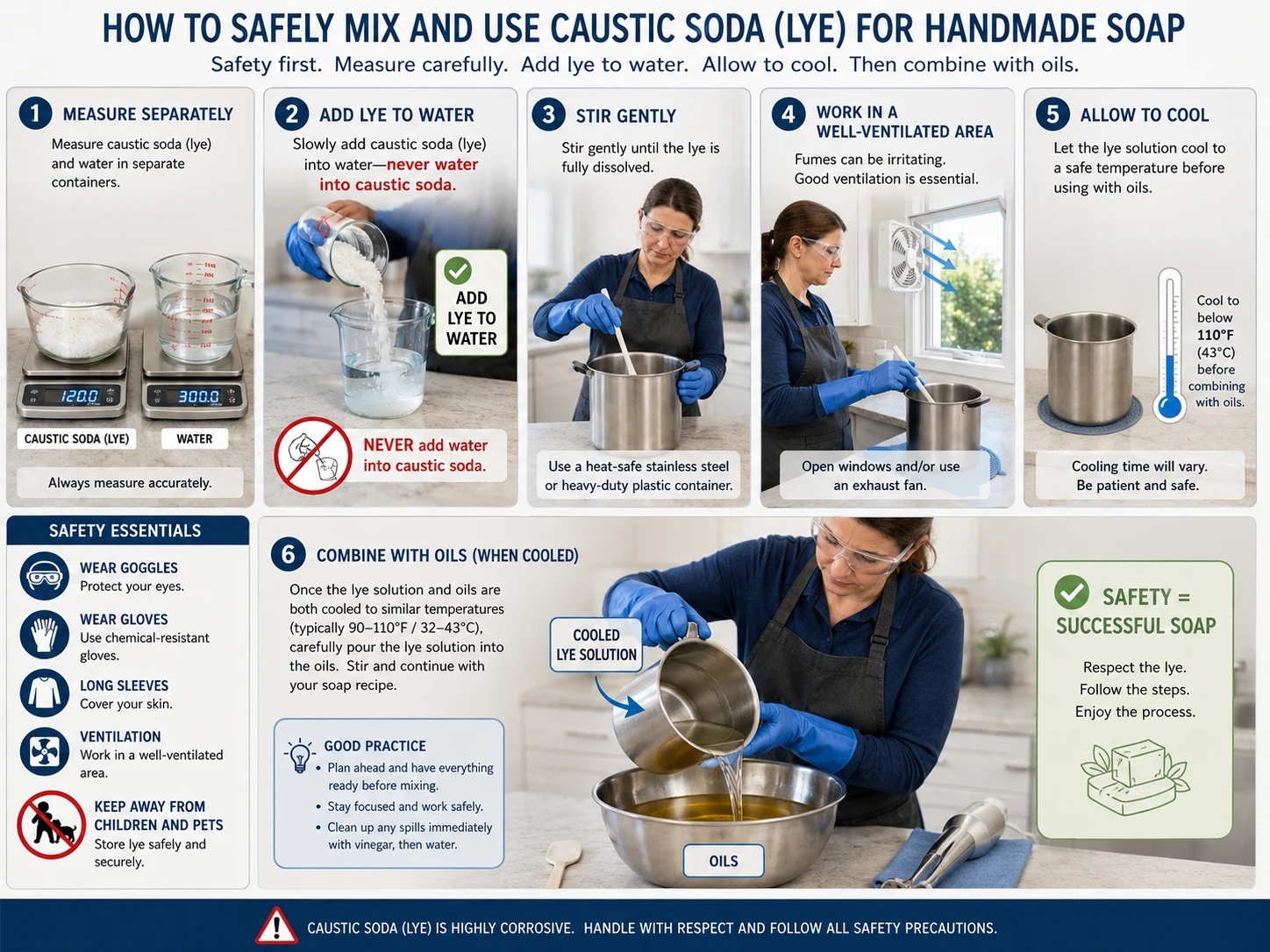
This is where theory meets practice. How to Use Lye Safely during mixing means following the golden rule every single time: always add lye to water, never water to lye. Reversing the order can cause a violent, volcanic eruption of hot, caustic liquid.
Adding Lye to Water: The Golden Rule
Pouring water onto dry lye is dangerous. The reaction generates instant heat and can cause splattering. Always measure your water first into a heat-resistant container, then slowly sprinkle lye into the water while stirring gently. The solution heats rapidly — temperatures can reach 200 degrees Fahrenheit or more. Let it cool before combining with oils.
- Measure distilled water into a heat-resistant container.
- Slowly add lye to the water while stirring gently.
- Monitor the temperature as the solution heats up.
- Allow the lye solution to cool before adding to oils.
Temperature Control During Mixing
Temperature affects every part of How to Use Lye Safely. Hot lye solution can warp containers not rated for high heat. Use a thermometer to track lye solution and oil temperatures. Aim for both to be within 10 degrees Fahrenheit of each other before combining. If the lye solution is too hot, place the container in a cold water bath to cool it faster — never add ice directly to the lye solution.
Choosing the Right Containers for Lye Solution
Container choice is a critical part of How to Use Lye Safely. Use only stainless steel, heavy-duty HDPE plastic (number 2 or number 5), or heat-resistant glass. Never use aluminum — lye reacts with it and produces flammable hydrogen gas. Avoid thin plastic containers that can melt or warp from the heat of the lye solution.
| Container Material | Safe for Lye? | Notes |
|---|---|---|
| Stainless Steel | Yes | Durable, heat-resistant, easy to clean |
| HDPE Plastic (#2 or #5) | Yes | Heavy-duty, heat-tolerant |
| Heat-Resistant Glass | Yes | Must be tempered or borosilicate |
| Aluminum | No — DANGER | Reacts with lye, produces flammable gas |
| Thin Plastic | No | Can melt or warp from solution heat |
Emergency Response and First Aid
Even with the best preparation, spills and splashes can happen. Knowing How to Use Lye Safely includes being ready to respond. Keep emergency supplies accessible, not buried in a cabinet. Write down the poison control phone number and post it in your workspace.
Skin Contact Response
If lye or lye solution touches your skin, act immediately. Remove any contaminated clothing. Rinse the affected area under cool running water for at least 15 minutes. Do not apply vinegar to skin — the acid-base reaction generates heat and can worsen the burn. Seek medical attention for burns that blister or cover a large area.
Eye Contact Response
Lye in the eyes is a medical emergency. Flush the affected eye with cool running water for at least 15 to 20 minutes, holding the eyelid open. Remove contact lenses if present. Seek immediate medical attention — do not wait to see if it feels better.
Surface Spill Cleanup
For dry lye spills, carefully sweep up the powder without creating dust. For liquid spills, neutralize with white vinegar, then wipe up with paper towels. Wear your protective gear during cleanup — the spill is still caustic. Dispose of cleanup materials in a sealed bag. Wash the area thoroughly with soap and water afterward.
Lye Storage Basics
Proper storage is the final piece of How to Use Lye Safely. Lye absorbs moisture from the air, which can degrade its potency and create a crusty mess around the lid. Store lye properly and it stays usable for months.
Choosing the Right Storage Containers
Why airtight containers matter: lye absorbs water fast, and proper sealing helps prevent contamination. Dry storage helps maintain potency, and less exposure increases storage longevity. Clear labeling prevents mix-ups in shared spaces and supports chemical safety by reducing accidental misuse. At Soap Craft Lab, we always recommend pairing tight seals with bold labeling.
Original Container vs Transfer
Keeping the original container has advantages: it is designed for container integrity and has fewer resealing issues. If you transfer lye, check material compatibility — use HDPE or approved plastics. Label the new container immediately and follow strict handling precautions. Always double-check the seal before shelving it.
Store in Cool, Dry, Out-of-Reach Spaces
Safe placement is key to How to Use Lye Safely at home. Environmental control means cool storage with steady temperature control and a dry environment to prevent moisture. Access control means out-of-reach storage away from children and pets. Think high cabinet, locked shelf, no humidity.
Inspect Seals Regularly
Routine checks reinforce everything about How to Use Lye Safely. Follow a monthly inspection routine: inspect seals carefully, look for cracks, check lid tightness, and assess container integrity. Risk prevention through early damage assessment leads to active spill prevention and stronger overall storage safety. At Soap Craft Lab, we treat inspections like brushing your teeth — quick, regular, non-negotiable.
Soap Craft Lab: Stay consistent with monthly seal inspections, and you will stay safe. A cracked seal or loose lid is the most common cause of accidental lye exposure in home soap making.