
How to Reach Trace in handmade soap trips up beginners: you stir, squint, and wonder if anything is happening while oils and lye play hard to get. Soap Craft Lab formulation engineers, in their 2025 process notes, stress consistent emulsification control over speed for stable trace. Master that turning point and your batter behaves — smooth pours, clean swirls, fewer surprises.
Quick Notes: How to Reach Trace in Handmade Soap
- →Emulsification Control: Maintain oil and lye at 38-43 °C and blend in short bursts to achieve a stable light trace.
- →Trace Indicators: Watch for ribbon trails, mounding, and pudding consistency to gauge medium or thick trace stages.
- →Recipe Adjustments: Factor fatty acid profiles, water discount, and additives like clays or milk to fine-tune trace time.
- →Mixing Techniques: Alternate between stick blending for speed and hand stirring for precision; avoid over-mixing.
Foundations of Soap Batter and Trace
Getting clear on How to Reach Trace in handmade soap starts with understanding what is really happening in your bowl. Soap making blends science with feel. When oils meet sodium hydroxide, your soap batter shifts from thin and glossy to thick and pudding-like. Knowing how to reach trace in handmade soap keeps your cold process or hot process batch smooth instead of messy. At Soap Craft Lab, we teach soapmakers how to reach trace in handmade soap without guesswork, just solid technique and observation.
Understanding Saponification and Emulsification
To master How to Reach Trace in handmade soap, you need to understand two core reactions inside your mixing container. Saponification is the chemical reaction between fats and lye. Emulsification is the blending of oils and water so they stop separating. Stable suspension occurs when the soap batter no longer splits.
Here is how it unfolds in real time: oils and melted fats sit at a controlled temperature. The lye solution (water plus sodium hydroxide) is added. Stick blending forces droplets to combine. Emulsion forms. Visible trace appears.
- Light trace: thin, like cake batter.
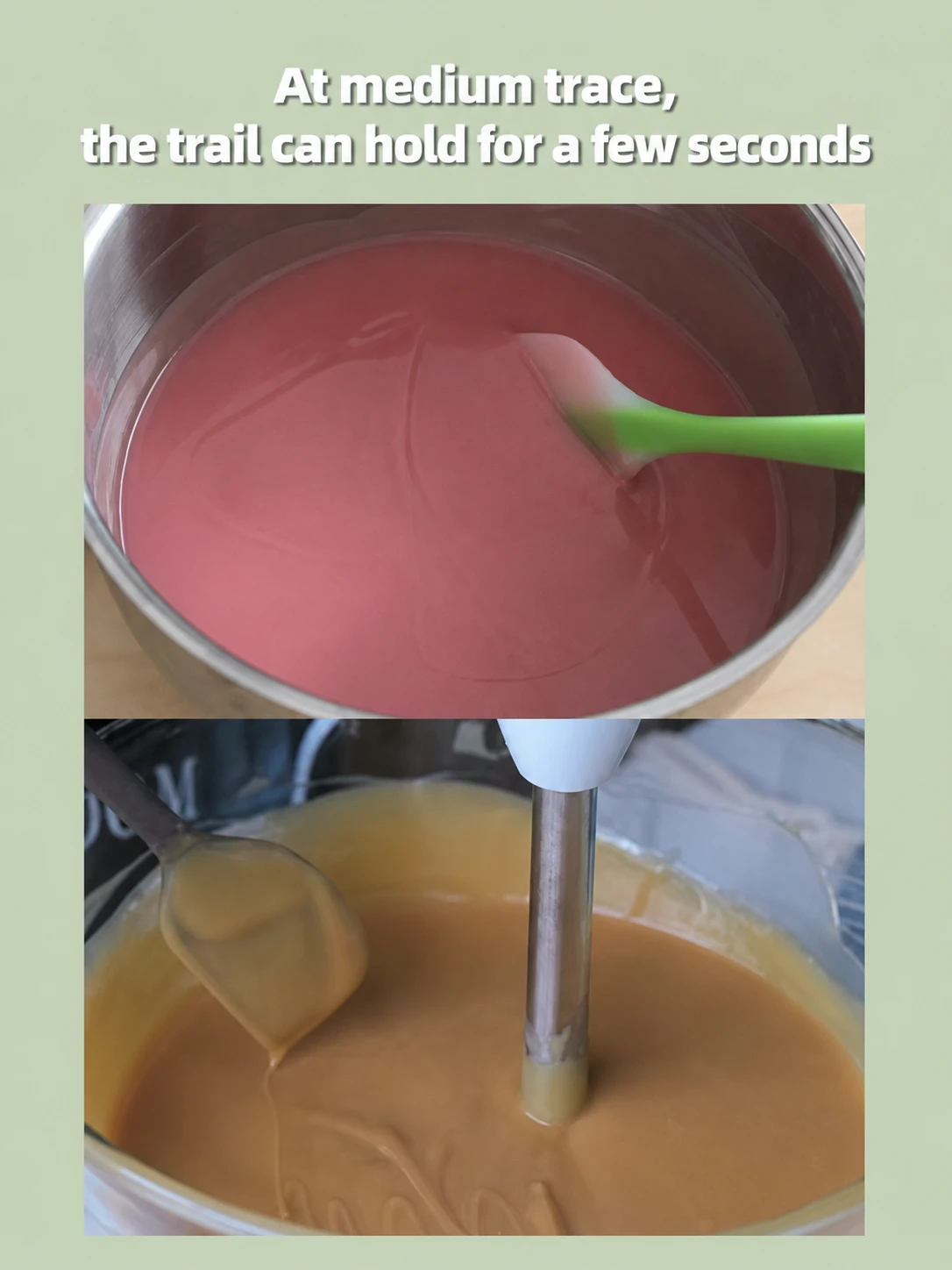
- Medium trace: leaves lines on the surface.
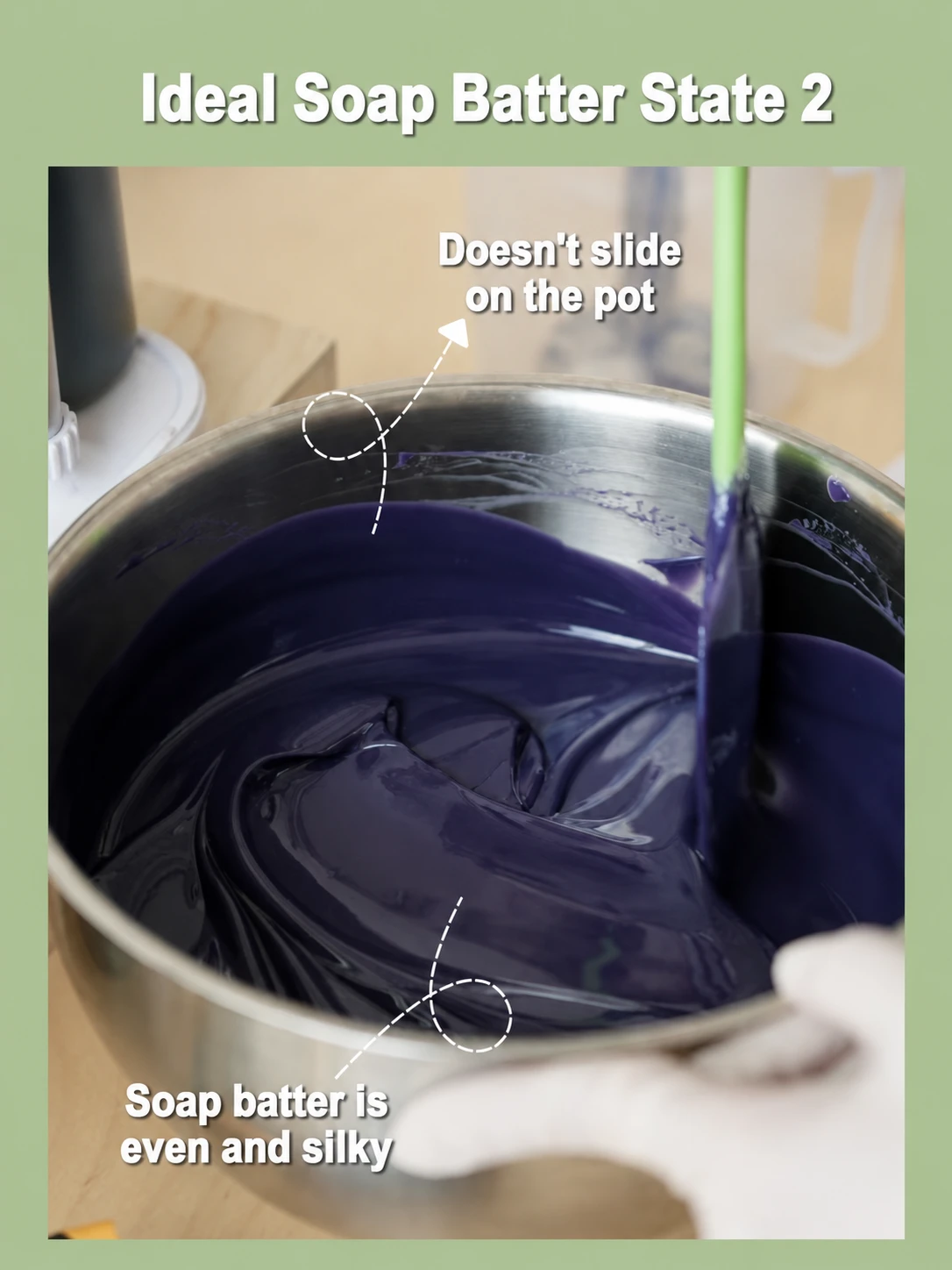
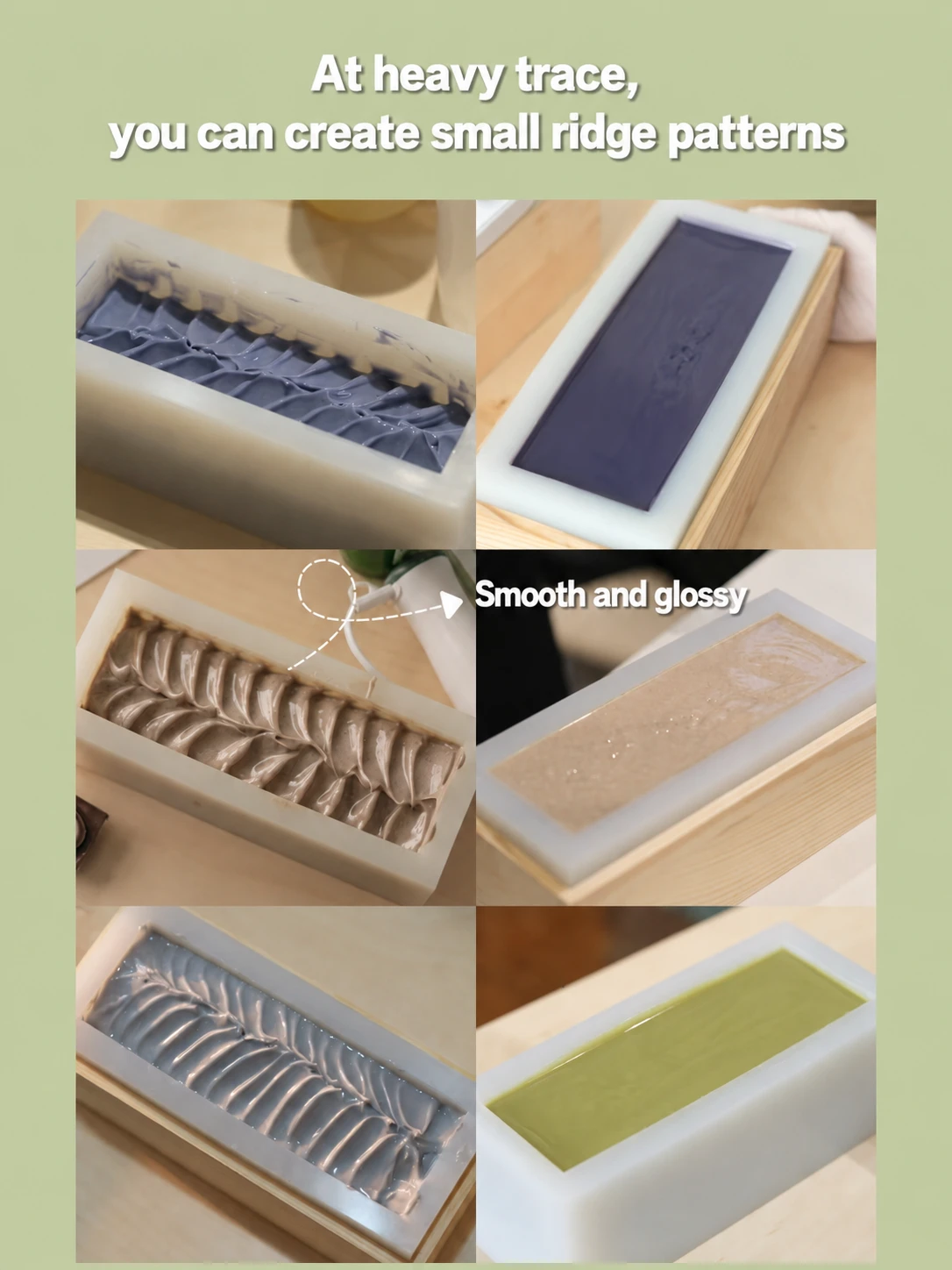
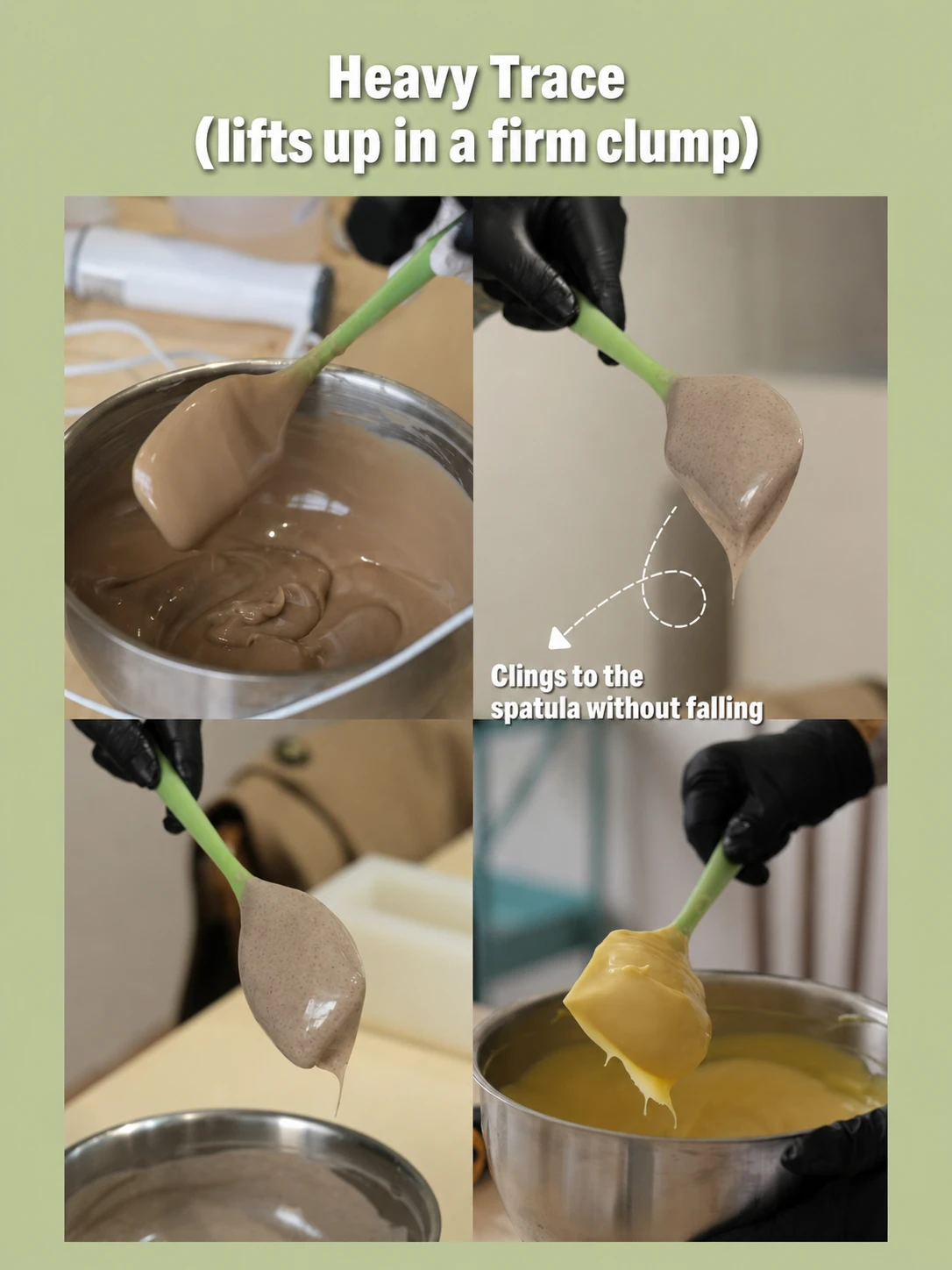
- Thick trace: heavy, spoon-standing texture.
- Visual cue: drizzle batter across the surface — if it leaves a mark before sinking, you have reached trace.
During saponification, triglycerides in your base oils split into glycerin and soap salts. The fatty acid profile — like high oleic in olive or high lauric in coconut — directly affects how quickly you reach trace. That is why how to reach trace in handmade soap is not just about blending longer; it is about chemistry balance.
Role of Oils and Lye Solution
Reaching trace depends heavily on formulation. Below is a scientific reference table showing how common oils influence trace speed in cold process soap making:
| Oil Type | Main Fatty Acid (%) | Typical Usage % | Trace Speed (1-5) | Hardness Value |
|---|---|---|---|---|
| Olive Oil | Oleic ~70% | 30-60% | 2 (Slow) | 17 |
| Coconut Oil | Lauric ~48% | 15-30% | 5 (Fast) | 79 |
| Shea Butter | Stearic ~40% | 5-15% | 4 (Moderate-Fast) | 61 |
| Palm Oil | Palmitic ~44% | 20-40% | 4 (Moderate-Fast) | 50 |
| Castor Oil | Ricinoleic ~85% | 3-8% | 3 (Moderate) | 14 |
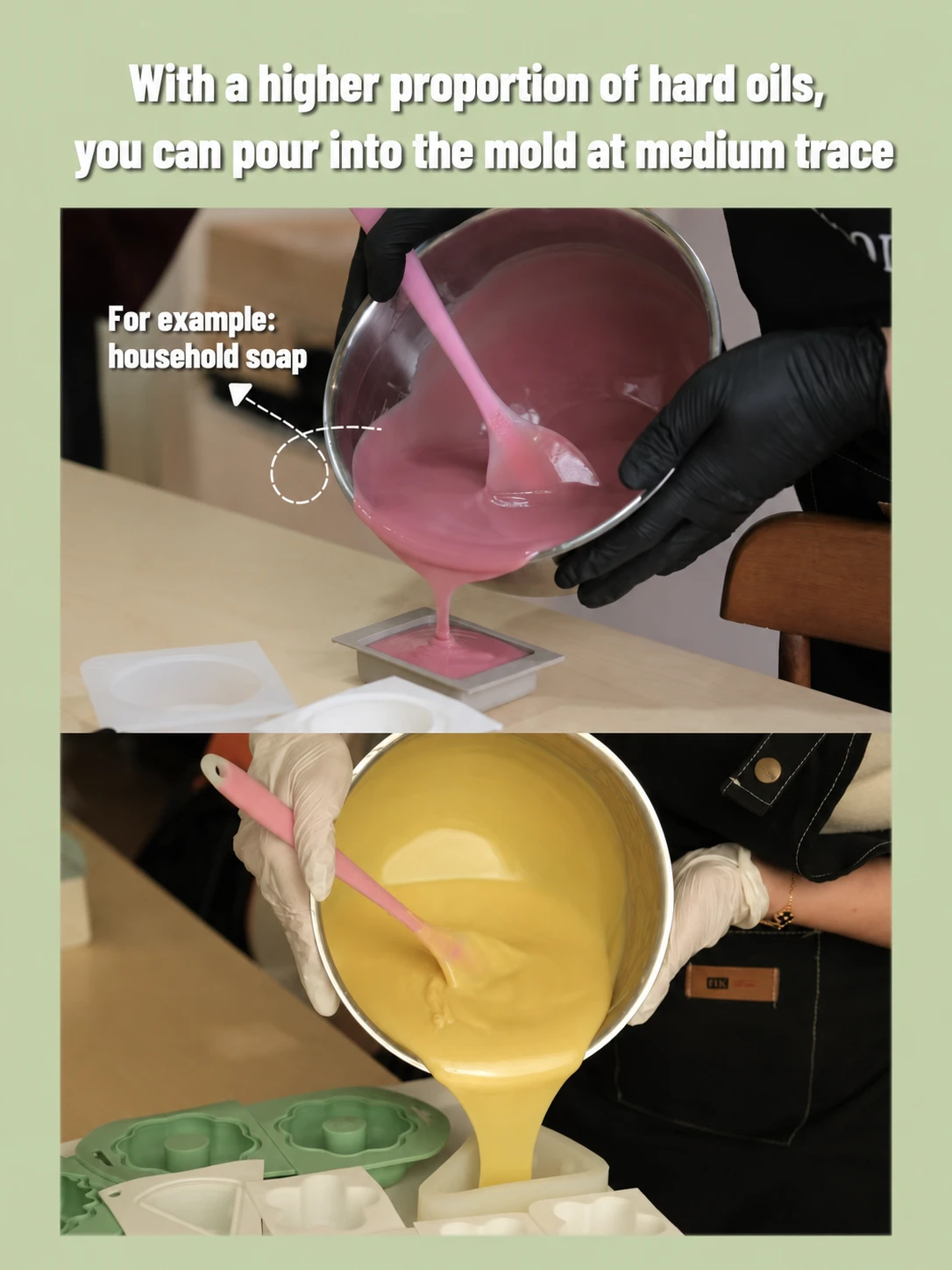
Hard oils such as coconut and palm speed up trace and increase firmness. Soft oils like olive and sweet almond slow trace and extend working time. When learning how to reach trace in handmade soap, small tweaks in water ratio or superfat percentage make a big difference.
Essential Equipment for Controlled Mixing
The right tools make how to reach trace in handmade soap way easier and safer. Core gear includes: a scale accurate to 0.1g, a stick blender, heat-safe containers, a digital thermometer, a silicone spatula, protective safety gear, and a soap mold.
- Temperature Management: Oils at 35-45 °C; lye solution within 5 °C of oils.
- Blending Technique: Short pulses with hand stirring between bursts.
- Visual Monitoring: Watch texture shift and test drizzle consistency.
- Keep your blender fully submerged and do not over-blend too soon.
Soap Craft Lab: Stop at light trace for swirls. Learning how to reach trace in handmade soap is not about rushing — it is about watching texture, understanding your formula, and controlling your tools.
Mastering Trace Stages and Indicators
Getting clear on How to Reach Trace in handmade soap is where soap making stops feeling random and starts feeling intentional. Trace, that moment when soap batter thickens through emulsification, tells you the saponification reaction is moving forward. If you have ever wondered how to reach trace without over-blending, this guide keeps it real and practical.
Identifying Light, Medium, and Thick Trace
When learning How to Reach Trace in handmade soap, understanding stages of thickening and viscosity is everything. Let us break it down in a way that actually sticks:
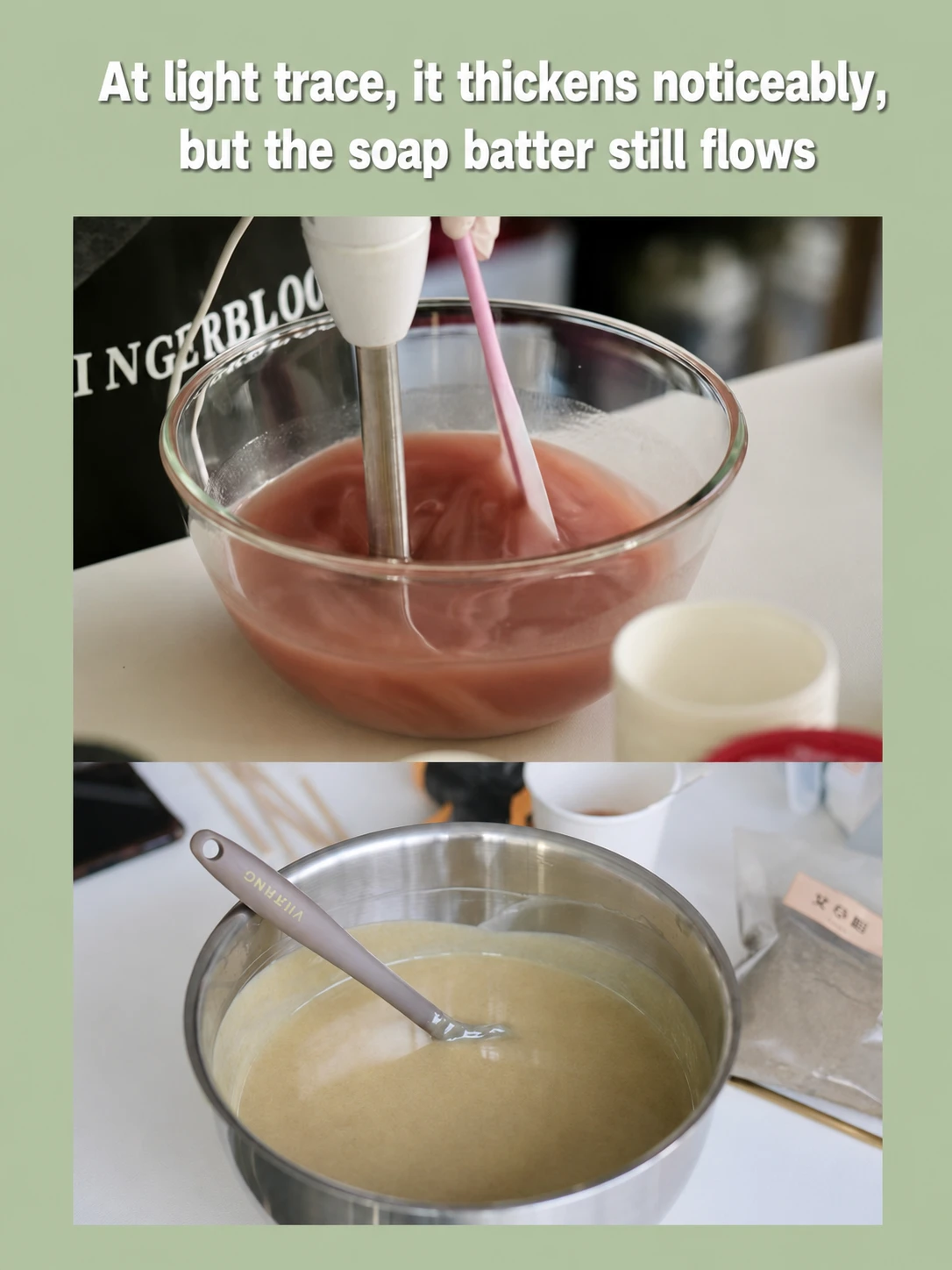
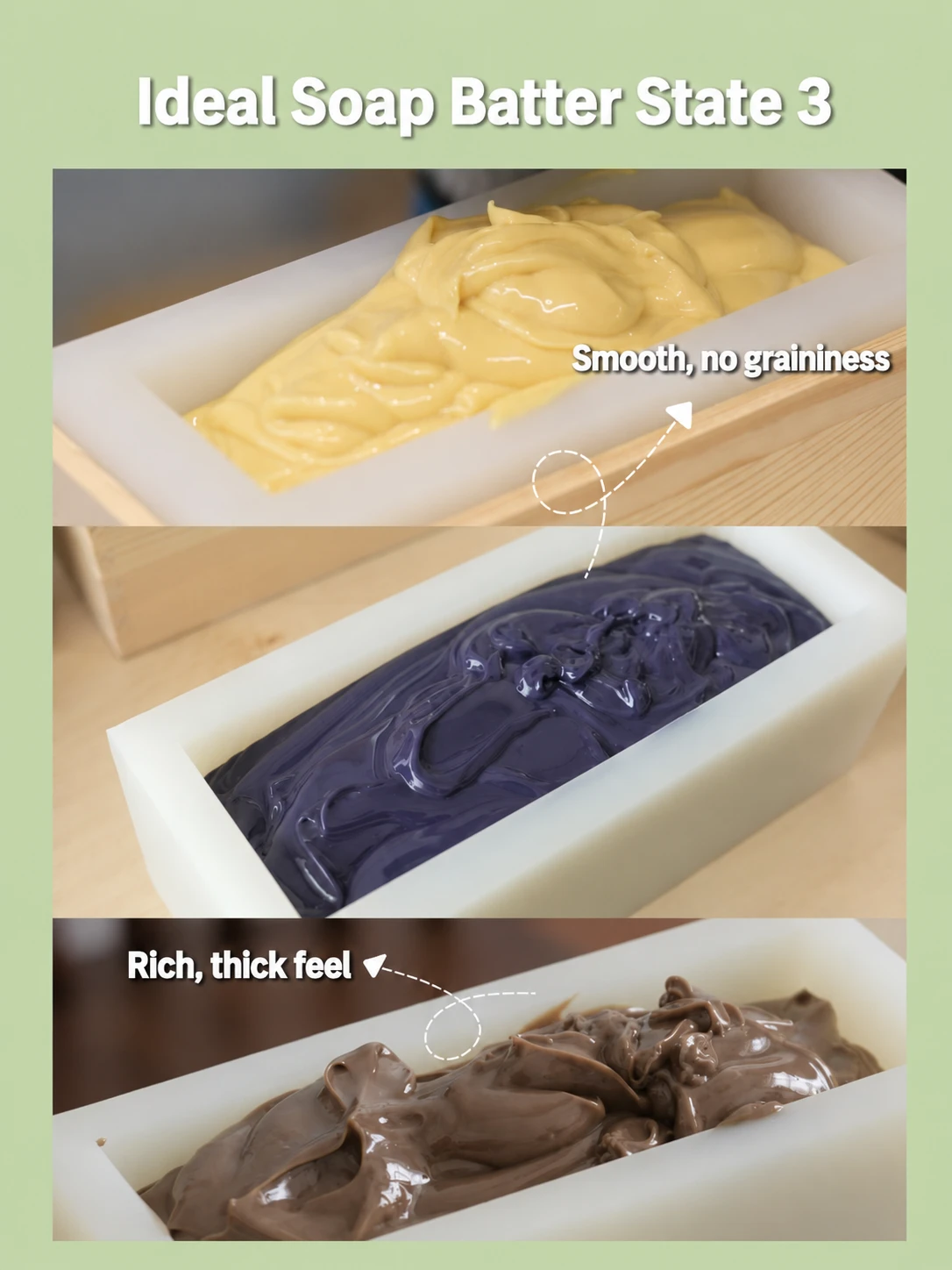
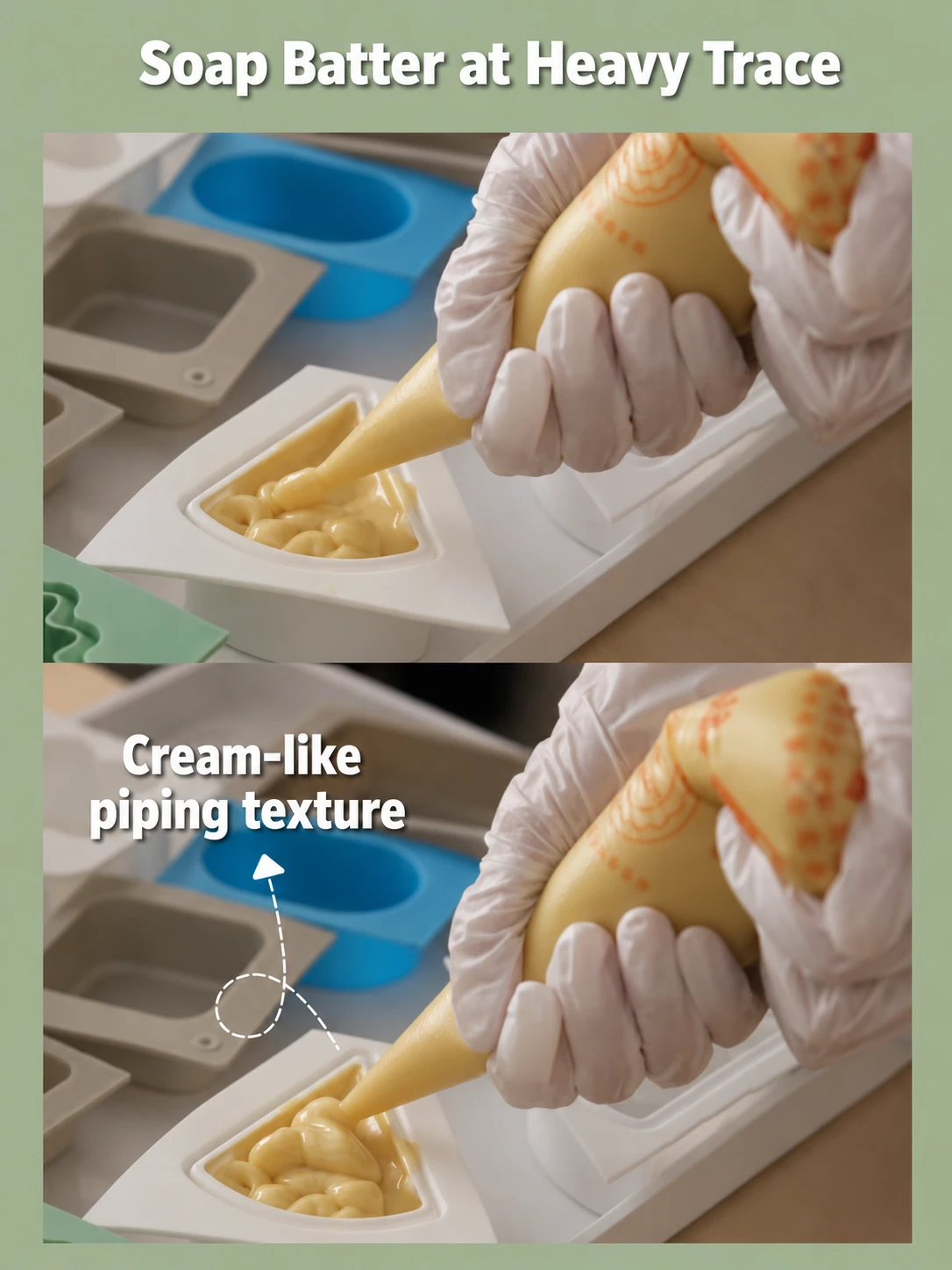
Light trace: the batter is still fluid with a slight trail on the surface. This is early emulsification where oils and lye are fully combined. It is best for intricate swirls and detailed designs. Medium trace: the appearance is similar to warm custard with trails that stay visible longer. Active saponification is occurring with growing viscosity. It is best for layering and textured tops. Thick trace: the batter is pudding-like and holds peaks. Advanced alkali and fatty acids bonding is happening with noticeable heat from the exothermic reaction. It is best for sculpted tops and spoon plops.
Soap Craft Lab: At Soap Craft Lab, instructors often say that knowing how to reach trace is less about the blender and more about watching the batter behave. That mindset shifts everything.
Visual and Texture-Based Trace Indicators
The signs of trace are not subtle once you know them. Short cues you will notice: the surface leaves a ribbon mark, the batter shifts from glossy to slightly matte, and a drizzle sits briefly before sinking.
- Ribbon trace: dripped batter leaves a visible line on the surface.
- Mounding: small peaks remain when batter is spooned.
- Texture shift: batter moves from thin liquid to structured soap batter.
- Tool feedback: stick blender leaves resistance; spatula drags slower.
To reach trace in cold process soap, temperature matters. If your oils are too cool, you may hit false trace — solid fats thickening without real emulsification. Too hot, and the batter races ahead.
Common Mistakes in Recognizing Trace
Mistakes usually fall into a few buckets, and most beginners hit at least one: air bubbles mistaken for trace, over-blending, or misreading temperature changes.
- False Trace: caused by hard oils cooling fast — the batter looks thick but has no full saponification. Remedy: warm slightly and check for true emulsion.
- Over-Processing: caused by continuous blending — the batter jumps to thick trace with limited time for design. Remedy: pulse in short bursts and stir manually between.
- Uneven Mixing: caused by poor incorporation of alkali solution — results in inconsistent esterification and a weak final bar. Remedy: scrape sides and blend thoroughly.
How to reach trace the right way? Blend in short bursts. Stir manually between pulses. Watch texture, not just time. At Soap Craft Lab, students practice recognizing trace under different temperatures and recipes, building instinct instead of rushing the process.
Techniques to Reach Trace Efficiently
Getting confident with How to Reach Trace in handmade soap is a game changer. When you understand mixing speed, heat, and texture, trace stops feeling mysterious and starts feeling predictable. Let us break down how to reach trace in soap without stress, wasted batches, or overworked arms.
Stick Blending vs Hand Stirring
If you are learning How to Reach Trace in handmade soap, tool choice matters. A stick blender speeds up emulsification with quick bursts of power. Manual stirring builds patience and control.
- Combine melted oils and cooled lye solution.
- Insert the stick blender fully to avoid air bubbles.
- Pulse for 3-5 seconds.
- Stop and stir manually with a spatula.
- Check consistency — if it leaves a light line before sinking, you are there.
Short bursts keep things smooth. Constant blending can push your soap batter to heavy trace fast. At Soap Craft Lab, controlled stick blending is the go-to method when teaching how to reach trace in soap safely and consistently.
Temperature Control Strategies
Temperature can quietly make or break How to Reach Trace in handmade soap. Keep your ideal oil range warm but not hot. Ensure lye solution is fully dissolved in water. Use a thermometer for both. Balanced heat supports steady emulsification. Too hot, and the batter thickens suddenly. Too cool, and you risk false trace.
Balancing Mixing Speed and Consistency
Speed affects texture. Slow and steady gives flexibility; high speed builds thickness quickly. The sweet spot is controlled bursts followed by hand stirring. Watch how the batter falls from the blender — if it leaves a light line before sinking, you have reached trace. Mastering how to reach trace in soap is not about rushing. It is about reading texture, respecting temperature control, and trusting the process.
Factors Influencing Trace Behavior
Getting clear on How to Reach Trace in handmade soap makes the whole soapmaking process feel less stressful. Trace is not random; it reacts to oils, water, and extras you toss into the pot. When you understand what drives trace in handmade soap, you control texture, timing, and design.
Impact of Fatty Acid Profiles
When learning How to Reach Trace in handmade soap, fatty acids are the quiet drivers behind the scenes. Hard oils such as palm and cocoa butter push thickening faster. Liquid oils like sunflower extend working time. A high hard-oil ratio gives a quick light trace and a faster move to medium trace. A high liquid-oil ratio delays heavy trace and provides a more fluid batter. At Soap Craft Lab, recipes are tested so makers can predict how to reach trace without panic.
Water Discount and Superfat Effects
Water and superfat tweak how to reach trace in subtle but powerful ways. Less water means a faster reaction and an increased risk of rapid thickening. Higher superfat means extra oils that soften the final bar and slightly slow full emulsification. A small adjustment can shift your timing by minutes. If you are dialing in How to Reach Trace in handmade soap, test one variable at a time.
Additives and Their Influence on Trace
Add-ins can totally change how to reach trace. Clays often speed trace lines. Milk may raise heat and quicken pudding consistency. Some fragrance oils accelerate fast. Pre-mix powders to avoid clumps, add fragrance at light trace, and adjust blending duration gently. Small signs matter: slight surface texture, thicker drips, visible trails. Mastering these clues sharpens your skill in How to Reach Trace in handmade soap.
Working with Batter After Trace
Getting confident with How to Reach Trace in handmade soap is one thing; handling the batter after that point is where the craft really comes alive. Once you understand how to reach trace in handmade soap, control becomes easier, designs get sharper, and mistakes shrink. Mastering how to reach trace, managing soap trace stages, and knowing how to reach trace in handmade soap consistently will level up every batch you pour.
Incorporating Fragrance and Essential Oils
When learning How to Reach Trace in handmade soap, timing fragrance addition is critical. Add scent at light to medium trace. Stir gently to protect emulsification. Watch changes in viscosity and confirm stable trace. Pour fragrance into the center, then blend briefly with a stick blender or use hand stirring for control. Some fragrance oils react fast with the lye solution, especially under higher concentration percentage or strong water discount — that is when batter can thicken in seconds.
Adding Colorants and Exfoliants
Color work depends on trace control. Disperse pigments in lightweight oils. Add botanicals at stable trace. Mix until uniform. Clays absorb moisture and may speed thickening. If you are practicing How to Reach Trace in handmade soap, remember: thicker batter suspends exfoliants better. Adjust mixing speed, monitor ambient temperature, and account for humidity. A slower blend keeps flow; a burst with the stick blender firms things up.
Maintaining Pourability and Design Control
Design hinges on understanding How to Reach Trace in handmade soap and reading trace stages clearly. Light trace flows like custard. Medium trace holds ribbons. Thick trace supports peaks. Control comes from managing lye solution strength, adjusting water discount, and watching room conditions. If batter moves too fast, lower mixing speed next round. If it is sluggish, tweak concentration percentage. Small changes shape big results. Nail how to reach trace in handmade soap, and your designs stop feeling random — they start feeling intentional.